
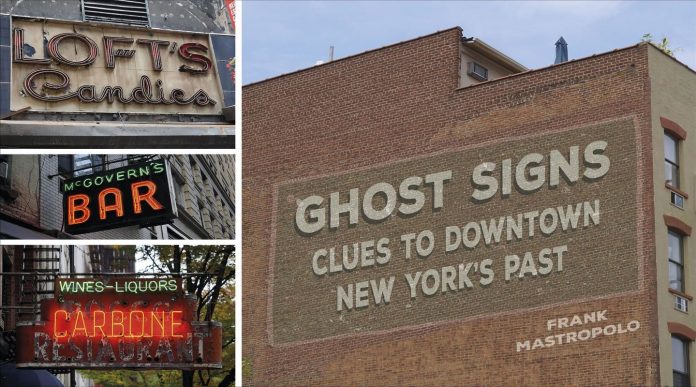
Walking around the city, we often see signs of New York’s past, from old antique shop signs to faded advertisements painted on buildings. Famous sites like Nom Wah Tea Parlor in Manhattan Chinatown, Cohen’s Optical on the Lower East Side, and Katz’s Delicatessen all contain these signs dating back to the early 1900s, detailing Manhattan’s eventful and significant history. However, many of these “ghost signs” have gone unnoticed or have been destroyed by modernization efforts, these pieces of history erased.
Journalist and photographer Frank Mastropolo recently published his book Ghost Signs: Clues to Downtown New York’s Past, which combines journalism with photography to uncover stories of the past hundred years in Manhattan. His book focused on ghost signs, which are relics, whether they be advertisements on the sides of buildings or shop signs that have faded away or have been covered by graffiti or more modern shops.
Mastropolo began writing about and photographing ghost signs in 2014 on the Lower East Side and Greenwich Village. Mastropolo tells us that while building renovations have destroyed many of these historic signs, many of them “that have been covered for decades have also been revealed, if only for a short time. The signs are ideal subjects; they don’t move and never ask for any dough for taking their picture.”
Ghost Signs: Clues to Downtown New York’s Past tells the stories of many of these ghost signs through historical analysis and photography. He credits the online ghost fan community for supplying leads to many of these spots. The book depicts ghost signs from as early as the mid-1800s like Wah Lin Chinese Laundry, opened by Chinese immigrants who were barred from jobs in manufacturing, farming, and mining. According to Mastropolo, one in four Chinese men worked in a laundry. The sign, created over 150 years ago, is at the site of the Antler Beer and Wine Dispensary and still remains readable despite years of weathering.
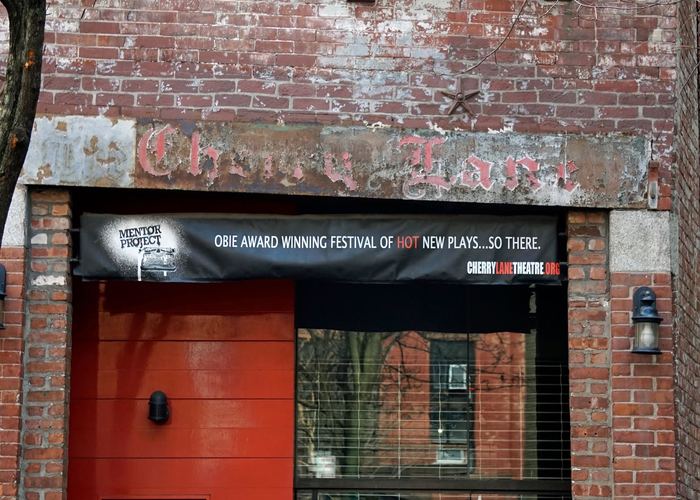
Other very old ghost signs include the Cherry Lane Theatre, which opened in 1817 as a farm silo but was converted into a theater by author Edna St. Vincent Millay (who lived in the city’s narrowest townhouse just nearby) converted the building into a playhouse.
In addition, a double ghost sign can be found at 316 Bleecker Street dating back to the mid-1850s. Samuel Tuck was an importer and dealer of embroidery and lace, but his sign was painter over the 1860s by Mrs. A. Swinton, a millinery shop.
Mastropolo notes in the book how ghost signs take many different forms like signs painted on to buildings, molded insignias, plastic neon signs, plaques on buildings or on sidewalks, and religious symbols. These signs also take the form of fallout shelter signs from […]

